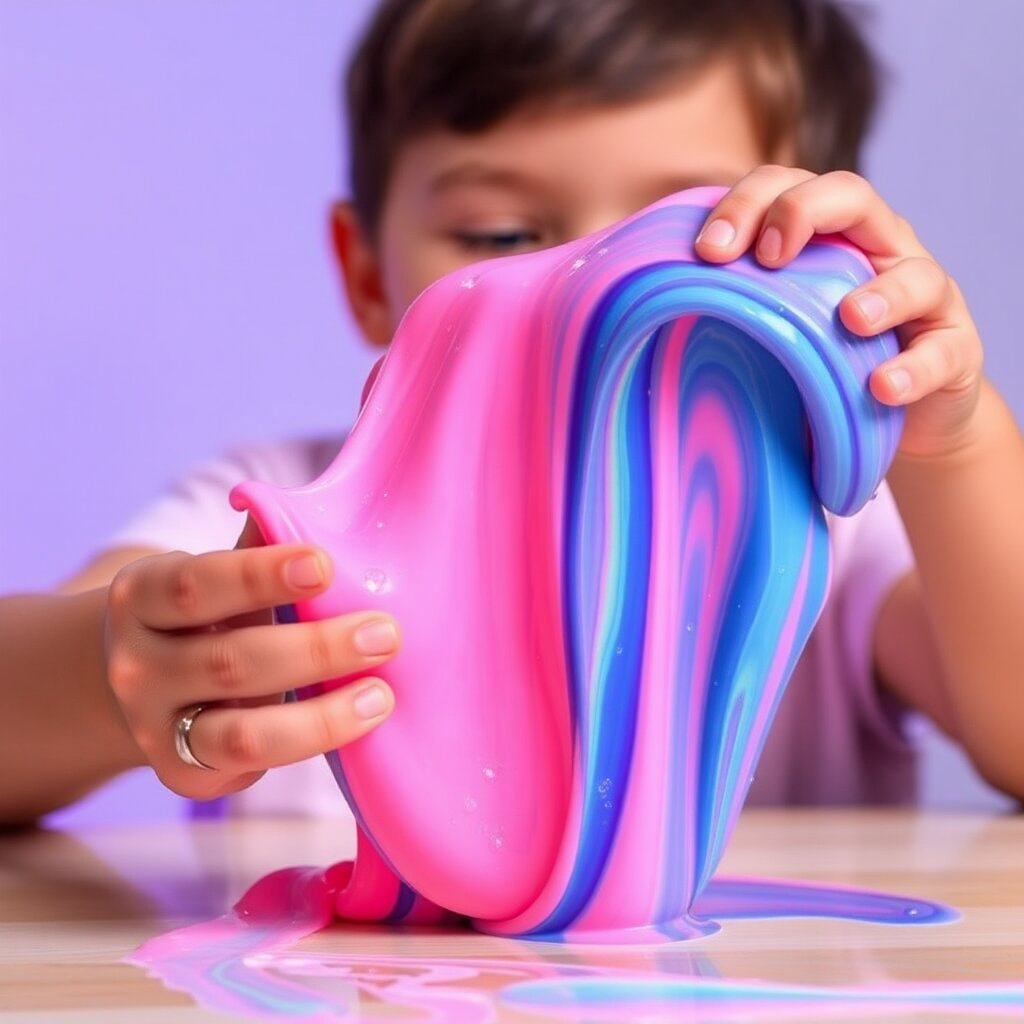
Viral No-Glue Slime Experiments
Test out popular internet recipes to see if you can make stretchy, squishy slime without using any glue. You'll learn about different textures and how common household ingredients react to create sensory play.
Tools
- mixing bowls (3)
- stirring spoons (3)
- measuring spoons
- measuring cups
Materials
- cornstarch (1 cup)
- dish soap (1/2 cup)
- shampoo (1/2 cup)
- salt (1 tsp)
- baking soda (1 tbsp)
- food coloring (3 drops per batch)
- water (2 tbsp)
Safety
- Adult supervision required when handling household chemicals like dish soap.
- Do not eat the slime ingredients.
- Wash hands thoroughly after playing with slime.
- Perform the experiment on a tray or table covered with a cloth to avoid messes.
- Adult supervision required for sharp objects.
- Do not eat or drink any materials used in this project.
- Protect work surface. Materials may stain clothing.
- Adult supervision required for children under 8.
Steps
- Recipe 1 (The Soap Method): Pour 1/2 cup of thick shampoo or dish soap into a bowl. Add 3 drops of food coloring and stir until mixed.
- Add a pinch of salt (about 1/4 tsp) to the soap mixture and stir slowly. If it doesn't thicken, add another tiny pinch of salt.
- Place the soap mixture in the freezer for 15-20 minutes to see if it reaches a slime-like consistency.
- Recipe 2 (The Cornstarch Method): Pour 1 cup of cornstarch into a second bowl.
- Slowly add 1/2 cup of dish soap while stirring constantly with a spoon.
- If the mixture is too sticky, add 1 extra tablespoon of cornstarch. If it is too crumbly, add 1 teaspoon of water.
- Knead the mixture with your hands for 2-3 minutes until it becomes a smooth, dough-like slime.
- Recipe 3 (The Baking Soda Method): Mix 1/2 cup of shampoo with 1 tablespoon of baking soda in the third bowl.
- Stir the mixture vigorously until it becomes thick and glossy.
- Add 3 drops of food coloring and stir again.
- Compare all three recipes to see which one is the stretchiest and which one feels most like real glue-based slime.