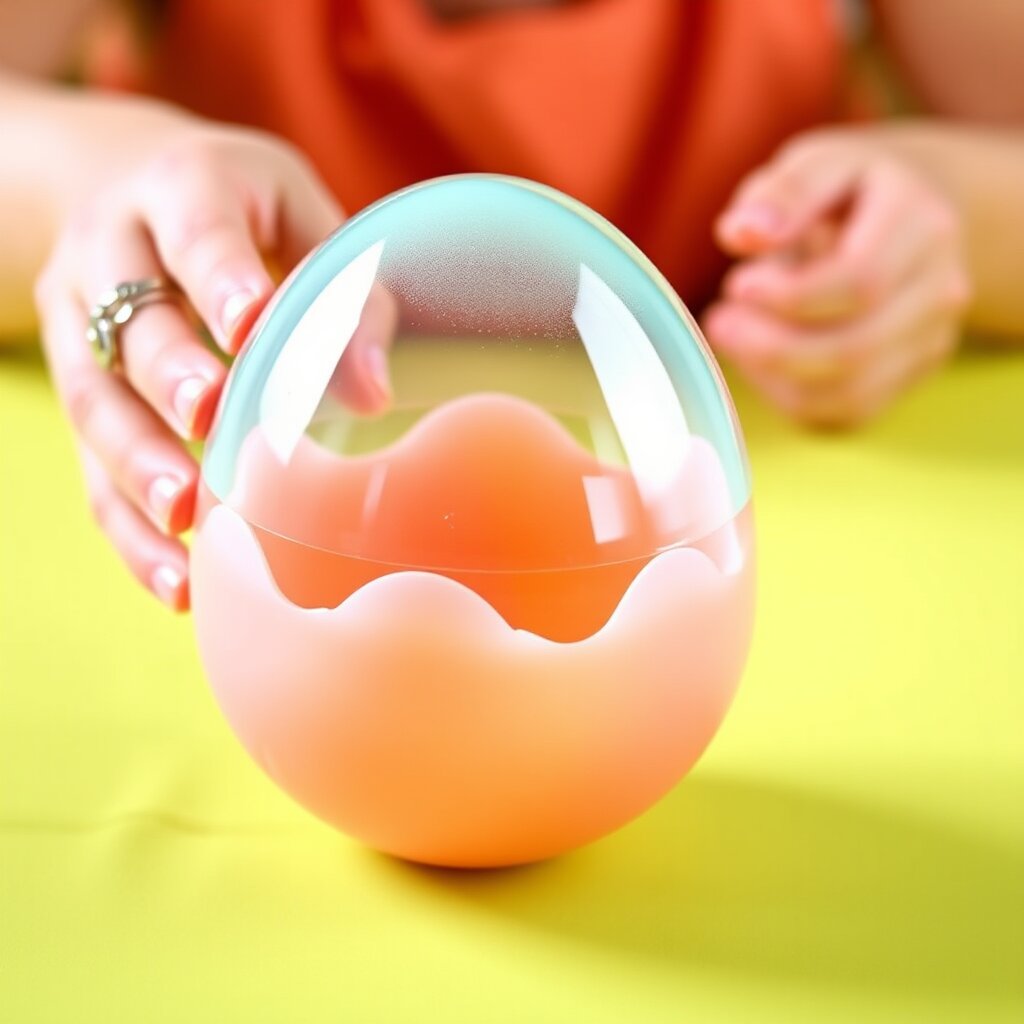
Bouncy Rubber Egg Experiment
Transform a hard-shelled raw egg into a squishy, translucent, bouncy egg! You will learn how the acid in vinegar reacts with the calcium carbonate in eggshells to dissolve them.
Tools
- glass or jar
- spoon
Materials
Safety
- Adult supervision is required.
- Wash hands thoroughly with soap and water after handling raw eggs to avoid salmonella.
- Be careful not to drop the eggs, as they can create a mess.
- Adult supervision required for sharp objects.
- Wash hands thoroughly after handling raw egg.
- Do not eat or drink any materials used in this project.
- Adult supervision required for children under 8.
Steps
- Carefully place one raw egg into a glass or jar.
- Pour white vinegar into the glass until the egg is completely covered.
- Observe the egg immediately to see small bubbles forming; this is the carbon dioxide gas being released as the acid reacts with the shell.
- Leave the egg to soak undisturbed for 24 hours.
- After 24 hours, carefully remove the egg from the vinegar using a spoon.
- Gently rub off any remaining bits of white shell under a stream of water or while submerged in the vinegar, being very delicate as the egg is now held together by a thin membrane.
- Once clean, observe the translucent egg and notice how you can see the yolk inside.
- Optional: Dim the lights and shine a flashlight through the egg to see a glowing effect.
- Test the bounce by gently dropping the egg from a low height (about 1-2 inches) onto a flat surface. Do not drop it from too high, or the membrane will pop!