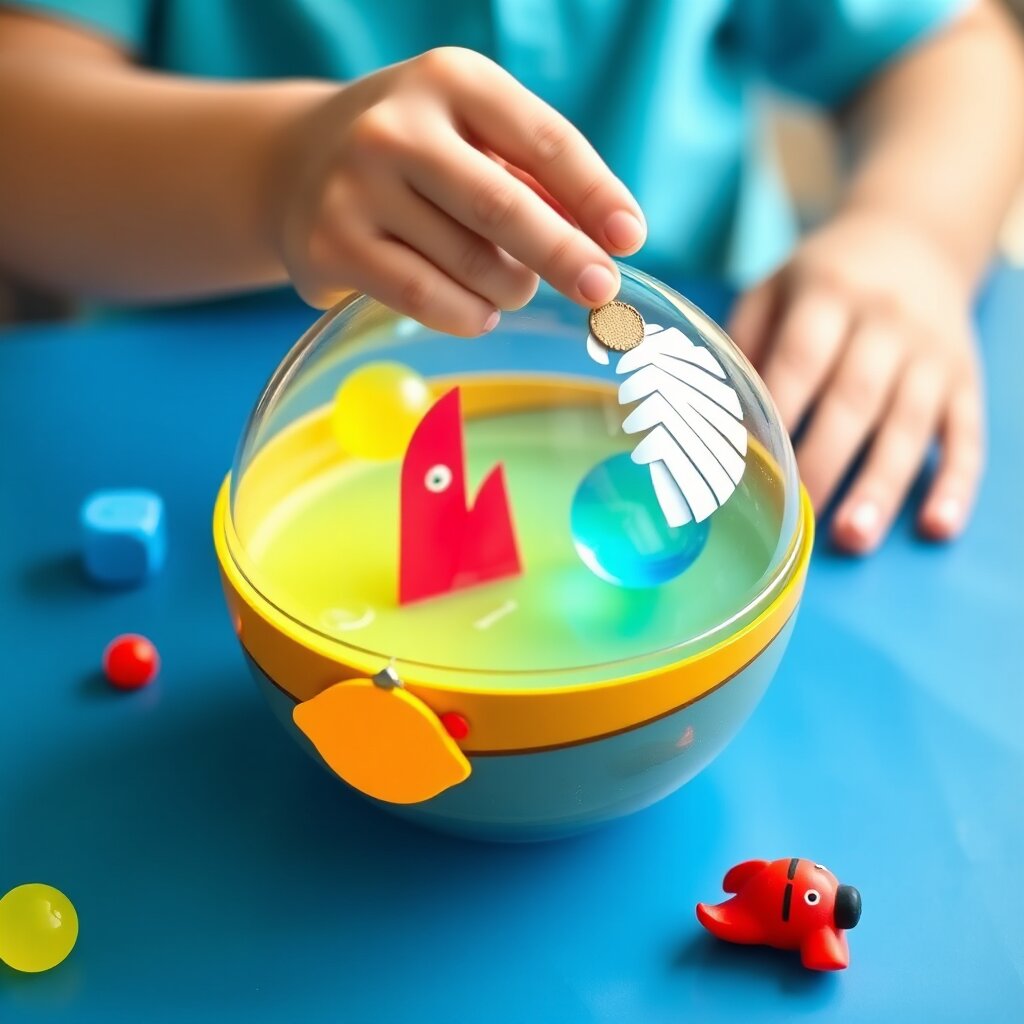
Sink or Float Fun Science Experiment
Explore the concept of density by predicting and testing which household objects sink or float in water. Kids will learn why some heavy things float and some light things sink!
Tools
- large clear plastic bin or deep bowl
Materials
- water (approx. 2 gallons)
- metal spoon (1)
- plastic spoon (1)
- cork (1)
- rock (1)
- coin (1)
- apple (1)
- ping pong ball (1)
- piece of aluminum foil (6-inch square)
- paper towels (2 sheets for cleanup)
Safety
- Adult supervision required when using water to prevent spills.
- Ensure all small objects are handled carefully to avoid choking hazards for very young children.
- Dry up any water spills immediately to prevent slipping.
- Adult supervision required for sharp objects.
- Adult supervision required for children under 8.
Steps
- Fill your large clear plastic bin or bowl with approximately 2 gallons of water.
- Gather all the materials (spoon, cork, rock, etc.) and place them on a table next to the bin.
- Create a 'Prediction Chart' on a piece of paper with two columns: 'Sink' and 'Float'.
- Pick up one object at a time and ask the child to predict if it will sink or float, then mark the prediction on the chart.
- Gently place the object into the water and observe what happens.
- If the object stays on the surface, it floats; if it falls to the bottom, it sinks.
- Record the actual result on the chart next to the prediction.
- Repeat this process for every item on the list.
- Experiment with the aluminum foil: first, crumble it into a tight ball and drop it in, then flatten it into a boat shape and see if the result changes.
- Discuss the results: explain that objects sink if they are denser than water and float if they are less dense.